

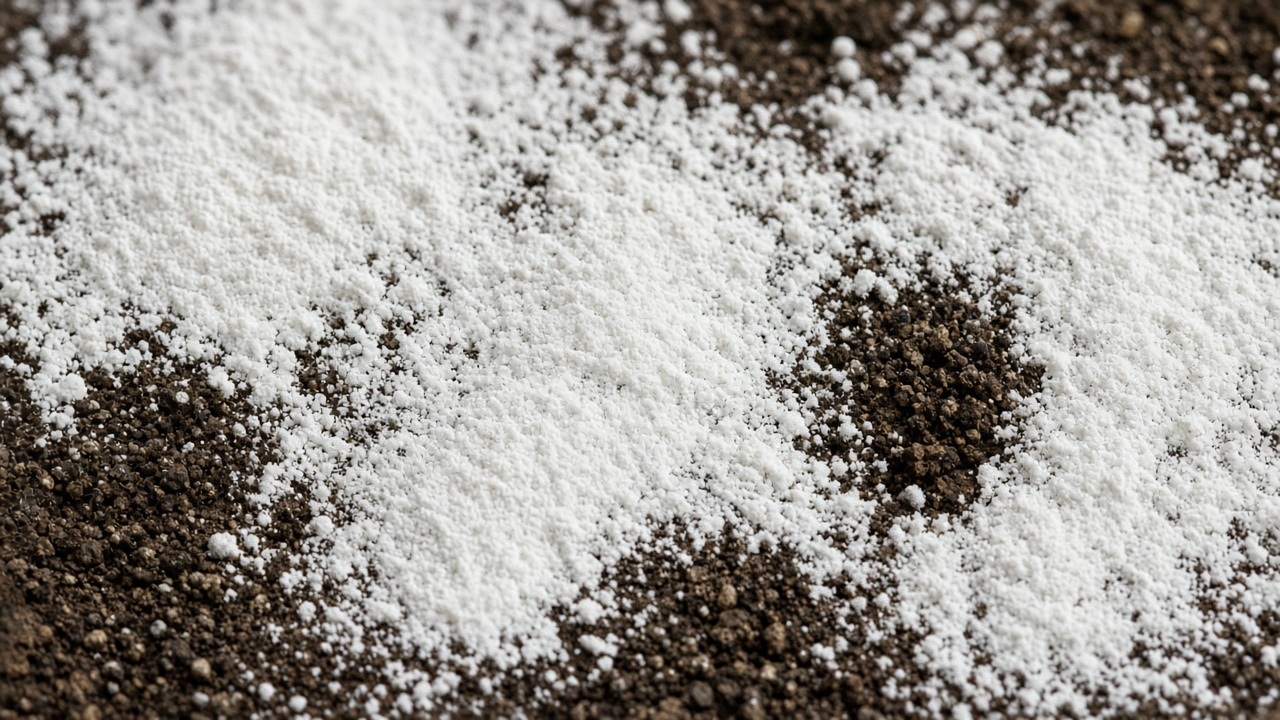
Variable rate lime changes the lime rate across a field during one pass. Lime is applied to raise soil pH. pH is not uniform, so the tons per acre that would fit one part of the field are the wrong tons for another. The prescription is a map of those tons, or of a rate the controller can meter, tied to where the samples were taken.
This is one of the older uses of variable rate application. pH maps from a grid often show a wider spread, inside a single field, than a person expects from looking at the crop. A former feedlot, a sand ridge, and a patch of high-carbonate soil can sit inside one fence.
What the map is built from
The usual inputs are soil pH and a buffer pH, from grid or zone samples. Soil pH says how acid or alkaline the sample is now. Buffer pH says how strongly that soil resists a change. Two soils can share a pH and still need different amounts of lime, because one is sandy and easy to move and the other is clayey and buffered. The sample depth matters. A result from the top six inches is not a result from the top two, and a no-till field can be more acid at the surface than a tilled one.
The lime material matters in the same way the fertilizer product matters. Calcitic lime and dolomitic lime both raise pH. Dolomitic lime also supplies magnesium. The fineness of the grind changes how quickly the material reacts. Labs express this as a calcium carbonate equivalent, a way of comparing a material to pure calcium carbonate. A prescription in tons of one lime is not a prescription in tons of another.
The pass
Lime is bulky. Rates are in tons per acre, not the tens or hundreds of pounds common for dry fertilizer, and the material bridges and dusts. Spreaders used for lime are often belt or floater machines set up for a heavy product. The controller still does what it does on a fertilizer pass: it reads a position, finds the target, and meters the belt or the gate. A coarse map, with a few rates, is common because the rate cannot change every few feet with a product this heavy.
Zones are a natural fit when the pH pattern is broad. A grid is a natural fit when acidic patches are small and scattered. Either way the as-applied record shows where the tons went. The soil will not show the new pH the next morning. Lime reacts over months, and the next soil sample is what shows whether the map and the material did what the plan described.
Lime is not a fertilizer map
A phosphorus fertilizer prescription and a lime prescription can be drawn from the same cores and still look nothing alike. They are different products, different units, and different soil properties. Management zones can be shared between them only when the pattern being followed is actually the same pattern. A zone drawn for yield is not automatically a zone of equal pH.